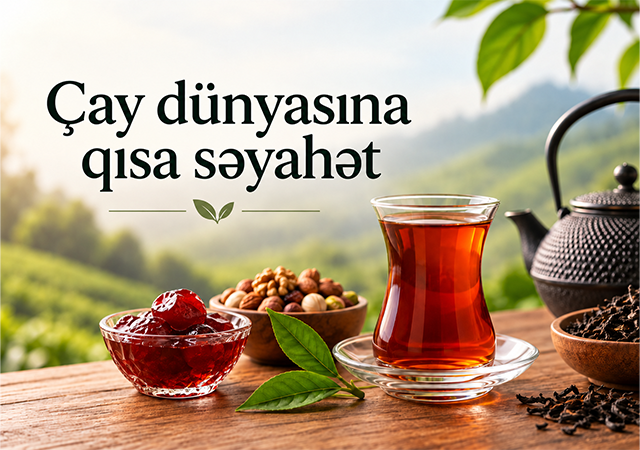
Tea is one of the beverages that holds a special place in our daily lives. It accompanies us in many moments, from the breakfast table and short breaks throughout the day to conversations with friends and welcoming guests. Yet behind this familiar beverage lies a diverse world of flavours, colours, and preparation methods. The characteristics of tea vary depending on many factors, from the region where it is grown to the way the tea leaves are processed.
But what makes different teas distinct, and what are the main types of tea? Let’s take a brief journey into the world of tea and discover some of its most well-known varieties.
The Main Types of Tea
Although black tea is often the first type that comes to mind when we think of tea, the world of tea extends far beyond it. The main types of tea include black, green, white, and oolong tea.
Black tea is known for its deep colour and full-bodied flavour. It is also one of the most common choices for everyday tea drinking in Azerbaijan.
Green tea is distinguished by its lighter flavour and distinctive aroma. Its production involves a different processing method designed to preserve the natural characteristics of the tea leaves.
White tea is characterised by minimal processing of the tea leaves. It is known for its delicate flavour and pleasant aroma.
Oolong tea is a distinctive type of tea with characteristics that fall between black and green tea. Its flavour and aroma can vary depending on the characteristics of the leaves used and the processing method.
What Determines the Taste and Colour of Tea?
Have you ever wondered why teas made from the same plant can have different tastes and colours?
Several factors play a role in this. The region where the tea plant is grown, the climate, the time of harvest, and the processing method all affect the final result. The way the tea leaves are processed plays an important role in shaping the colour, aroma, and flavour of the tea.
The brewing method is another factor that affects the taste of tea. The water temperature, brewing time, and amount of tea used can all produce different results. Therefore, the same tea can taste different when brewed in different ways.
Are Tea Traditions the Same Everywhere?
Tea is embraced in different ways across countries around the world. In some places, tea is served as part of special ceremonies, while in others, it is an integral part of everyday life.
For example, the tradition of drinking tea at certain times of the day is widely associated with England. In Morocco, mint tea is considered one of the symbols of hospitality. In Japan, tea is closely associated with a traditional ceremony and specific rules of preparation and presentation. In other words, while tea itself may be similar across different countries, the way it is prepared, served, and enjoyed tells a different story in each culture.
The Place of Tea on the Azerbaijani Table
In Azerbaijan, tea holds a special place of its own. Serving tea when welcoming guests and gathering around a cup of tea for a conversation with family members are familiar and cherished traditions of everyday life.
The Azerbaijani tea table also has its own distinctive serving details. The traditional armudu glass gives the table a unique appearance. Tea is often accompanied by jam, sweets, and a variety of nuts. In particular, the jam and sweets served alongside tea when welcoming guests are an important part of this tradition.
The beauty of a tea table also lies in the variety of choices. At “Araz” supermarket chain, you can find a variety of teas, as well as jams and different types of sweets to serve alongside your tea. This way, you can complete a classic Azerbaijani tea table with selections to suit your taste and bring your favourite flavours together at one table.